A festival lasts three days. A camera battery lasts two hours in direct sun. The crowd moves, stage lighting changes every 30 seconds, and your lens is not shockproof.
Handle those constraints first. Then handle the composition.
What gear to bring
Carry less than you think you need. A heavy camera body around your neck for 8 hours ends up in the bag.
- 📷 Mirrorless or compact DSLR: a Sony A7C, Fujifilm X-T50, or OM System OM-5 fits in a small backpack without drawing attention. Full-frame pro bodies (Canon R5, Nikon Z9) are rarely allowed into press pits and are difficult to carry for a full day.
- 🔭 Focal length: a 24-70mm covers most situations. Add an 85mm or 70-200mm for distant stage shots. Avoid 18-300mm superzooms. They are heavy and slow at f/6.3.
- 🔋 Batteries: two fully charged batteries minimum. Heat drains batteries twice as fast. Bring a compact power bank that charges the camera via USB-C if your model supports it.
- 💾 Memory cards: two cards, not one high-capacity card. One card fails and you lose everything.
- 🎒 Weather protection: a waterproof cover or spare plastic bag. Rain at outdoor festivals is common. The queue back to your tent costs you entire sets.
- ✅ Check the festival's photography policy before packing. Many ban detachable lenses or bodies with lenses over 30cm.
- ✅ A small waist pack holds a spare battery, an extra card, a lens cloth, and an ND filter without adding bag weight.
- ✅ Clean your sensor before leaving home. Dust on festival backgrounds (uniform skies, stage haze) shows up clearly in post-processing.
- ✅ Travel insurance: a policy with event cancellation cover is worth it for international trips — compare options
Camera settings for concerts
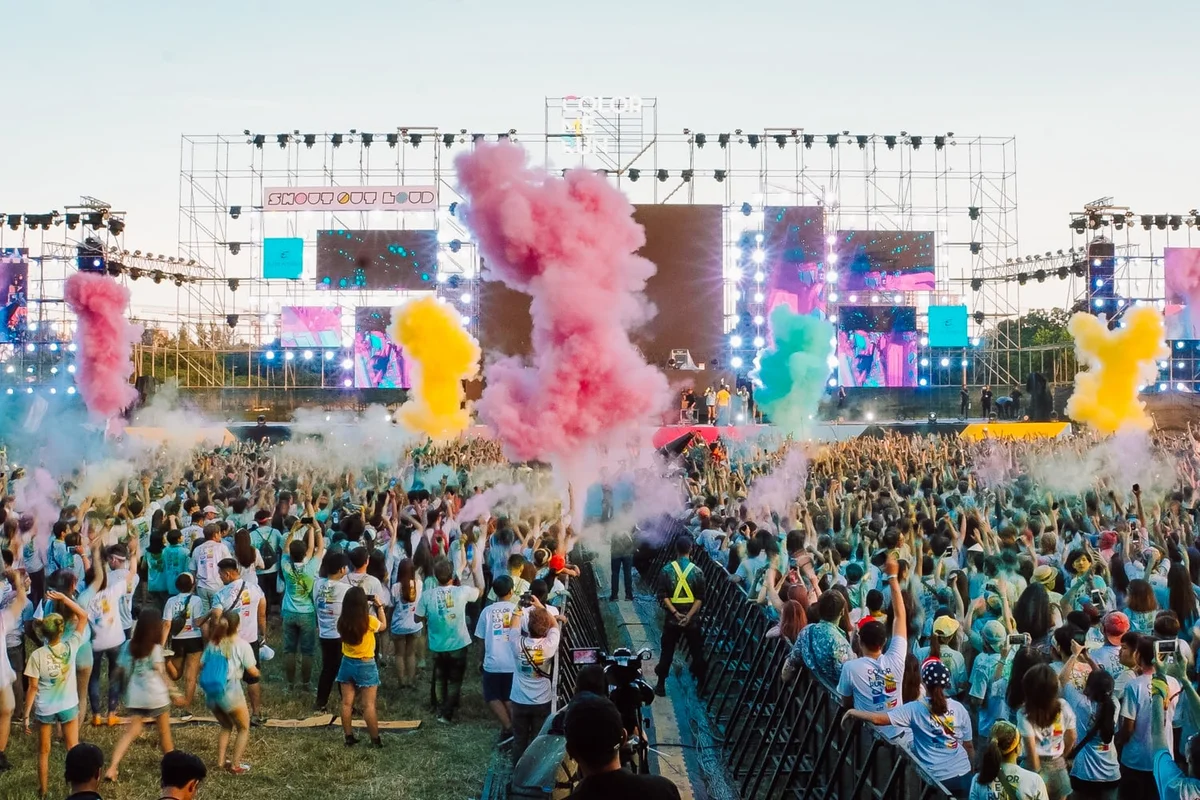
Outdoor concerts combine three problems: fast-moving subjects, shifting stage lighting, and a large exposure gap between the lit performer and the dark background.
- ⚡ Shutter speed: 1/250s minimum to freeze movement. 1/500s or 1/1000s if the artist dances or jumps. Below 1/125s, expect motion blur on arms and head.
- 🔦 ISO: in daylight outdoors, ISO 200 to 400. At night shows or under covered stages, push to ISO 1600 to 6400. Modern sensors handle ISO 3200 cleanly on most mid-range mirrorless bodies.
- 🎯 Aperture: f/1.8 or f/2.8 to pull in light and separate the subject from the background. At f/1.8 on a 24-70mm, focus accuracy in burst mode drops. Track the eyes, not the whole body.
- 📊 Metering mode: spot metering on the artist's face or torso. Matrix and evaluative metering overexpose or underexpose against stage backlighting.
- 🤖 Continuous autofocus: enable subject tracking (Eye AF on Sony, Dual Pixel CMOS AF on Canon). In low light with rapid movement, this determines sharpness.
Stage lighting cycles every 30 to 60 seconds. Shoot bursts of 5 to 8 frames per lighting state. You keep one or two shots per burst, but you multiply your chances of catching the right expression at the right light.
- ✅ Switch to silent mode (electronic shutter) if you are next to people watching the concert.
- ✅ Turn the flash off. It illuminates nothing at 20 metres and annoys everyone around you.
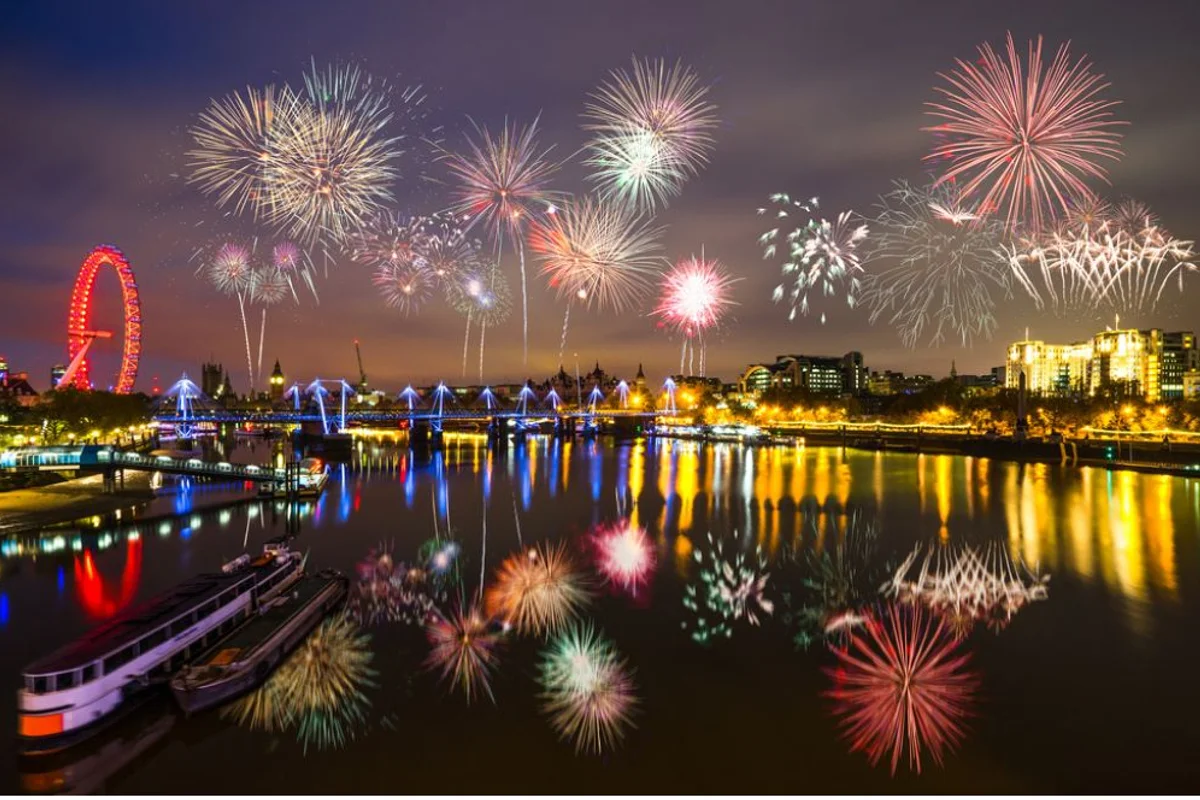
- ✅ For stages with pyrotechnics or fireworks, switch to manual before the effect fires. Adjust exposure to the ambient light, not the effect.
Angles and timing
The best festival photos are not stage photos. They are details, faces in the crowd, and the minutes between sets.
- 📸 Opening song: artists are at peak energy in the first minute on stage. The lighting crew front-loads their most dramatic effects for the opening. Get into position before the set starts.
- 🌆 Golden hour: 30 to 60 minutes before sunset. Warm, low-angled light produces strong portraits in the crowd without expensive equipment.
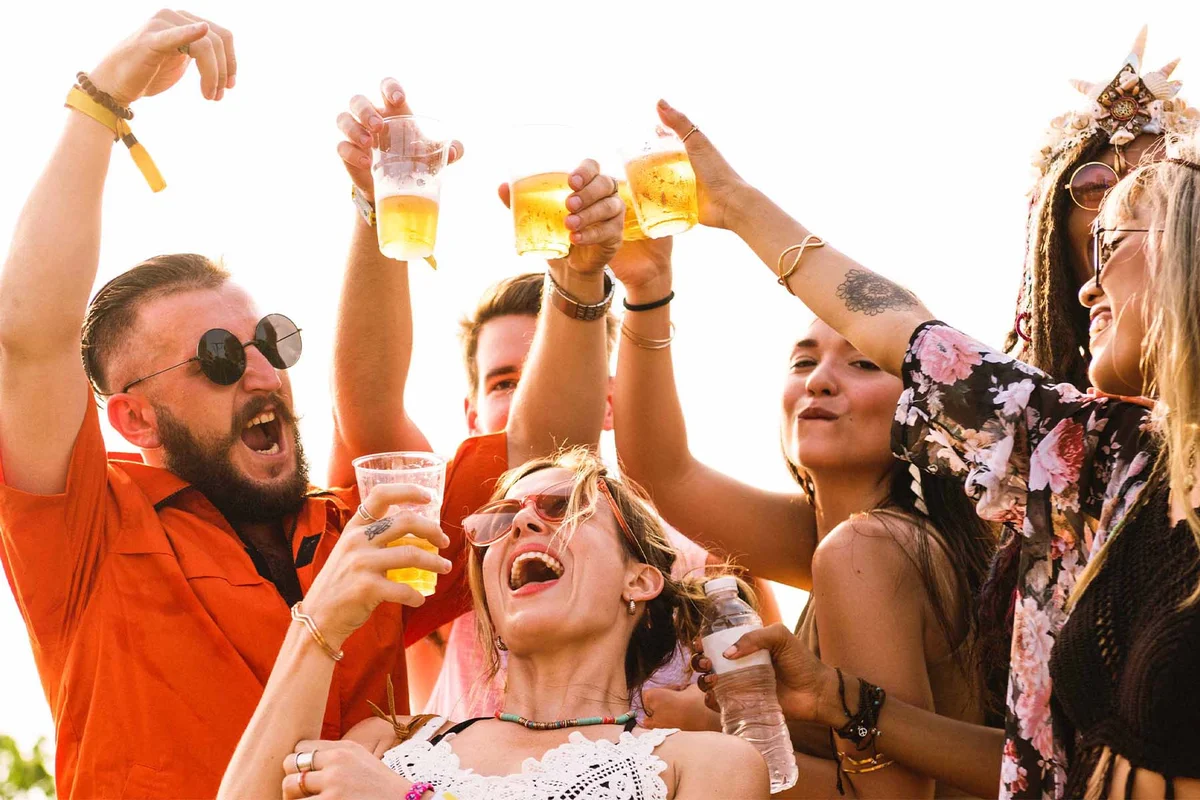
- 🎪 Between sets: secondary stages, people eating, group conversations, costumes, candid crowd moments. Festival magazines publish these shots, not another main stage photo from 200 metres back.
- 📐 Low angle: crouch down. A shot from crowd height with the stage in the background gives context. A shot from below with the crowd silhouetted against the sky has impact.
- 🏃 Move: do not stay in the same spot for an entire day. Different stages, different crowd densities, different light at different hours.
Shooting with a smartphone
An iPhone 15 Pro or Samsung S24 Ultra produces professional-quality shots in daylight. At a night concert, the right technique closes the gap between a phone and a camera body.
- 📱 Pro or manual mode: enable it if your phone offers it. Set ISO and shutter speed manually. Concert AI processing overcompensates and introduces artificial noise.
- 🌙 Night mode for concerts: Night mode (Scene Optimizer on Samsung) extends exposure to compensate for low light, but blurs moving performers. Turn it off for action shots, on for atmospheric long-exposure crowd shots.
- 🔭 Optical zoom only: use only the optical zoom (2x or 3x depending on the model). Digital zoom beyond the optical limit degrades the image in low light.
- 🎞️ RAW format: both iOS and Pixel phones shoot RAW (ProRAW on iPhone). Larger files, but they retain the data you need to fix exposure and colour in Lightroom Mobile.
For editing on the go, Lightroom Mobile is free and transforms a flat concert shot with three adjustments: lift the shadows, reduce the highlights, add clarity. It exports at full resolution to your camera roll.
Rules to know before you shoot
- ✅ Photo pit access: accredited photographers get access to the first three rows in front of the stage for the first three songs. Without press credentials, you shoot from the crowd. This is permitted at almost every festival.
- ✅ Artist photography rules: some artists ban photography or video, announced by the production team before the set starts. Respect the instruction. Security staff can ask you to delete files.
- ✅ Festival equipment policy: a detachable lens over 30cm or a body with no lens cap is refused at the gate. Check the festival FAQ before packing.
- ✅ Crowd portraits: photographing people in a public space is permitted. For a close portrait, ask first. It shows respect and produces a better reaction from the subject.
- ✅ Do not block the view: raising a camera or phone screen during a set blocks the view for people behind you. Take the shot, lower the camera.
For gear and packing advice, see our festival health and packing guide.