

Europe hosts the world's most diverse festival scene: from 400,000-strong electronic music weekends in Belgium to intimate jazz nights in Swiss vineyards, from Viking-style camping in Denmark to a medieval fortress turned dance floor in Serbia. Choosing where to spend your festival budget in 2026 is genuinely difficult.
Go Live It tracks thousands of live events across Europe. This ranking is based on lineup quality, crowd experience, production value, and value for international visitors. Here are the 15 best festivals in Europe in 2026, in order.
💡 Quick picks at a glance
🥇 Best overall: Tomorrowland (Belgium, July) — unmatched production, 16 stages
🎸 Best for rock/indie: Glastonbury (UK, June) — the world's most iconic live music event
🏰 Best hidden gem: Exit Festival (Serbia, July) — fortress setting, affordable city, strong lineup
#1 — Tomorrowland · Boom, Belgium
📅 Dates: July 17–19 and July 24–26, 2026
📍 Venue: De Schorre, Boom, Belgium
🎵 Genre: Electronic / Dance / EDM
🎟️ Capacity: ~200,000 per weekend
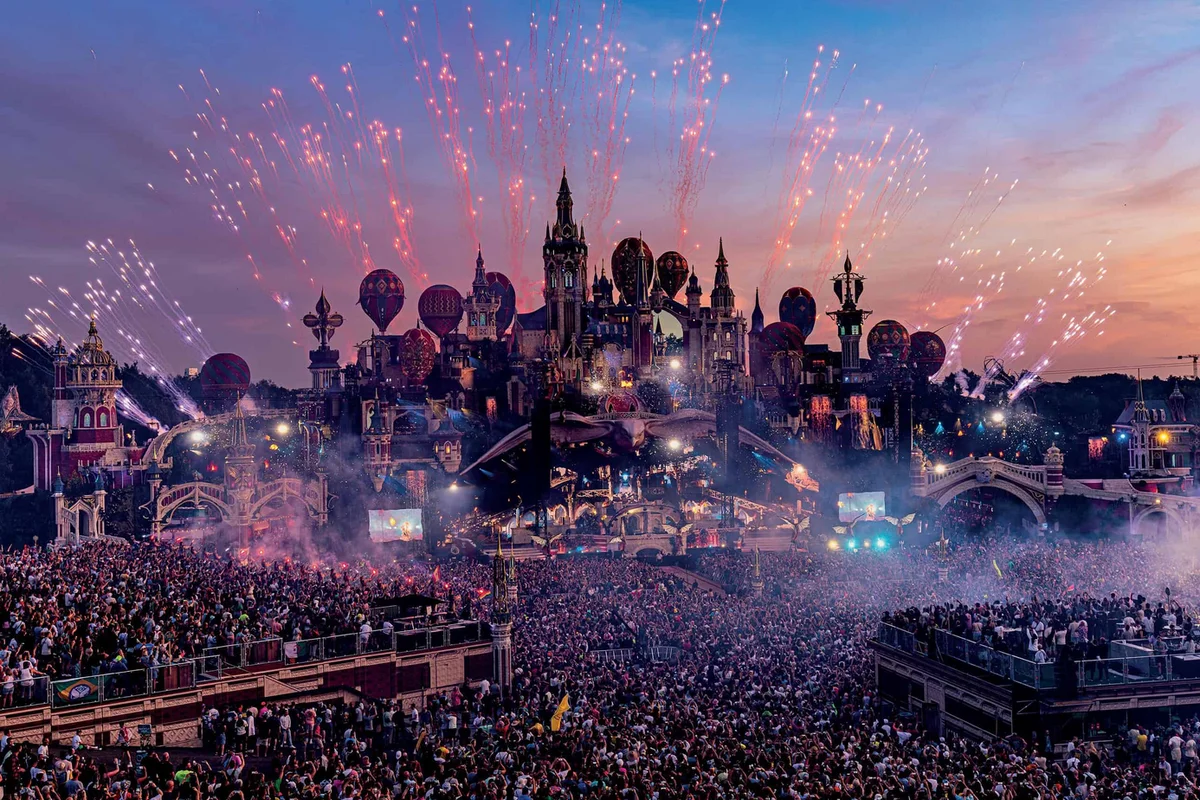
Tomorrowland is the world's most produced music festival. Sixteen stages, each with its own immersive theme, host the biggest names in electronic music across two consecutive weekends in July. The main stage alone takes six months to construct. The festival village (DreamVille) turns the whole site into a temporary city with its own infrastructure, food market, and themed accommodation zones.
Tickets sell out in minutes. Registration opens months in advance — set a reminder on the Tomorrowland site as soon as the 2026 dates are announced. Global Journey packages (which bundle flights, accommodation, and tickets) are available for international visitors and often last slightly longer than general ticket sales.
- 🎭 16 themed stages — each one a complete visual and musical world
- 🏕️ DreamVille camping — the most social festival accommodation in Europe
- ✈️ Global Journey packages — all-in-one travel + ticket bundles for international visitors
- 🌍 200+ countries represented — genuinely the most international festival crowd in Europe
#2 — Glastonbury Festival · Somerset, England
📅 Dates: June 24–28, 2026
📍 Venue: Worthy Farm, Pilton, Somerset, UK
🎵 Genre: Rock / Pop / Indie / World / Jazz / Dance
🎟️ Capacity: ~135,000
Glastonbury is in a category of its own. No other festival on earth has the same cultural weight — or the same mud. Five days across 100+ stages, spanning every genre from headlining rock acts on the Pyramid Stage to Bollywood DJs on the far reaches of the site. The Pyramid Stage headliners sell the festival; the 80 smaller stages define it.
Registration is mandatory and separate from ticket purchase. Register your passport on the Glastonbury website now — without a registered photo, you can't buy a ticket. Ticket sales typically happen in autumn for the following year. Travel: trains to Castle Cary station (direct coaches to site) or National Express coaches from London and Bristol.
- ⚠️ Register your passport now at glastonburyfestivals.co.uk — no registration = no ticket eligibility
- 🧥 Pack for all weather — the site is a working farm and rain turns fields to mud fast
- 🚂 Train + coach is the easiest access from London (avoid driving — parking is 20-min walk from the gate)
#3 — Rock Werchter · Werchter, Belgium
📅 Dates: July 2–5, 2026
📍 Venue: Festivalpark Werchter, Belgium
🎵 Genre: Rock / Indie / Pop / Electronic
🎟️ Capacity: ~90,000/day
Rock Werchter consistently wins 'best festival' awards across Europe for a reason: four days of headliners spread across two main stages, with genuinely diverse bookings that mix rock, indie, and electronic acts. The production is world-class, the site is flat and easy to navigate, and Belgium's central position makes it accessible from France, Netherlands, Germany, and the UK in under two hours.
The nearby town of Leuven (20 minutes by train) is an excellent base — student city, affordable, with excellent bars. Camping on-site is well-organised. Day tickets available but multi-day passes offer much better value.
#4 — Roskilde Festival · Roskilde, Denmark
📅 Dates: June 27 – July 4, 2026
📍 Venue: Roskilde, Denmark (30 min from Copenhagen)
🎵 Genre: Rock / Metal / Hip-Hop / Electronic / World
🎟️ Capacity: ~130,000
Roskilde is Northern Europe's biggest festival and one of the oldest non-profit festivals in the world. Every profit goes to humanitarian causes. The lineup is eclectic — spanning metal, hip-hop, ambient, and folk on 8 stages over 8 days. The camping culture here is uniquely social: groups build elaborate camp installations, and the pre-festival camping days are almost as much of an event as the concerts.
Copenhagen is 30 minutes by train from Roskilde — easy to use as a base if you're not camping. The Orange Stage (capacity 80,000) is one of the largest festival stages in the world.
#5 — Primavera Sound · Barcelona, Spain
📅 Dates: June 3–7, 2026
📍 Venue: Parc del Fòrum, Barcelona
🎵 Genre: Indie / Rock / Electronic / Experimental
🎟️ Capacity: ~60,000/day
Primavera Sound is the festival for music discovery. The lineup consistently surfaces artists two years before they headline Glastonbury, alongside legacy acts playing career-defining sets. The Parc del Fòrum location — right on the Barcelona waterfront — means you finish a headline set at 3 AM and walk into one of the world's most exciting cities. No camping: the city is the base.
An additional Madrid edition runs the following weekend (June 11–15). Barcelona accommodation books up fast — aim to reserve hotels within 48 hours of ticket purchase.
#6 — Hellfest Open Air · Clisson, France
📅 Dates: June 19–22, 2026
📍 Venue: Clisson, Loire-Atlantique, France
🎵 Genre: Metal / Hard Rock / Punk / Heavy
🎟️ Capacity: ~60,000/day
Hellfest is the largest heavy music festival in France and one of the most impressive in the world for the genre. Six stages host 150+ bands across four days in the medieval-feeling town of Clisson. The organisation is meticulous — queues move fast, the site is clean, and the crowd is remarkably welcoming even by festival standards. Non-metal fans attending with metal-fan partners are regularly converted.
#7 — Sziget Festival · Budapest, Hungary
📅 Dates: August 6–11, 2026
📍 Venue: Óbudai-sziget island, Budapest, Hungary
🎵 Genre: Pop / Rock / Electronic / World / Arts
🎟️ Capacity: ~70,000/day
Sziget — 'Island of Freedom' — turns a Budapest island into a self-contained city for a week. The lineup spans pop, rock, and electronic across 60 stages, but what sets it apart is the arts programme: circus performances, contemporary dance, installations, and a beach. Budapest itself is one of Europe's most affordable capitals — excellent ruin bars, thermal baths, and Danube views make it easy to justify a full week.
#8 — Paléo Festival · Nyon, Switzerland
📅 Dates: July 14–19, 2026
📍 Venue: Plaine de l'Asse, Nyon, Switzerland
🎵 Genre: Rock / Pop / World / Chanson
🎟️ Capacity: ~40,000/day
Paléo is Switzerland's biggest open-air festival and one of the most beloved in Europe for its atmosphere. Six days on the shores of Lake Geneva, with a lineup that mixes mainstream pop with world music and French chanson. The site organisation is among the best in Europe — short queues, excellent food village, and the Nyon-to-Lausanne corridor provides beautiful scenery. Very family-friendly.
#9 — Exit Festival · Novi Sad, Serbia
📅 Dates: July 9–13, 2026
📍 Venue: Petrovaradin Fortress, Novi Sad, Serbia
🎵 Genre: Electronic / Techno / Hip-Hop / Rock
🎟️ Capacity: ~25,000/night
Exit Festival's setting is unmatched: a 17th-century fortress overlooking the Danube, with stages built into ramparts, tunnels, and moats. The Dance Arena — the main electronic stage — is one of the most spectacular outdoor club setups in Europe. Novi Sad is affordable (hotel + food costs a fraction of Western European equivalents), flights from major hubs are cheap, and the Serbian summer climate is reliable.
#10 — FIB Benicàssim · Benicàssim, Spain
📅 Dates: July 16–19, 2026
📍 Venue: Benicàssim, Castellón, Spain
🎵 Genre: Indie / Rock / Electronic / Pop
🎟️ Capacity: ~35,000/day
FIB (Festival Internacional de Benicàssim) is where British indie culture meets Mediterranean beach. Four days of indie, rock, and electronic acts on a site 200m from the sea. Concerts don't start until 7 PM — the site opens to beach access during the day. The lineup skews British and has historically been strong for indie and alternative. Valencia (55 minutes) serves as the main hub for flights and trains.
#11 — Open'er Festival · Gdynia, Poland
📅 Dates: July 1–5, 2026
📍 Venue: Gdynia-Kosakowo Airport, Poland
🎵 Genre: Pop / Rock / Electronic / Hip-Hop
🎟️ Capacity: ~30,000/day
Open'er is Poland's biggest international music festival, held on a decommissioned airport in the Tricity area (Gdańsk, Gdynia, Sopot). The flat site is very easy to navigate; the Baltic Sea beach is a 15-minute bus ride away. Poland's relatively low prices make it one of the most affordable major festival destinations in Europe. LOT Polish Airlines and Ryanair serve Gdańsk airport from most European hubs.
#12 — Download Festival · Donington Park, UK
📅 Dates: June 13–15, 2026
📍 Venue: Donington Park, Derbyshire, UK
🎵 Genre: Metal / Rock / Punk / Alternative
🎟️ Capacity: ~110,000 total
Download is the UK's premier rock and metal festival, held at the legendary Donington Park motorsport circuit. Three days, three stages, and a lineage that stretches back to the original Monsters of Rock events. The crowd is knowledgeable and the production matches Glastonbury scale. East Midlands Airport is 10 minutes away; trains serve Castle Donington from Nottingham and Leicester.
#13 — Wacken Open Air · Wacken, Germany
📅 Dates: July 30 – August 1, 2026
📍 Venue: Wacken, Schleswig-Holstein, Germany
🎵 Genre: Heavy Metal (all subgenres)
🎟️ Capacity: ~85,000
Wacken Open Air is the world's largest heavy metal festival and a pilgrimage site for the genre. The small village of Wacken (population: ~1,800) temporarily becomes one of Germany's most populous locations. The festival is famous for its community spirit — metal fans from 80+ countries, legendary mud, and a crowd that helps strangers out of that mud. Hamburg (90 km) is the nearest major city; shuttle buses run directly to the site.
#14 — Eurockéennes de Belfort · Belfort, France
📅 Dates: July 2–5, 2026
📍 Venue: Malsaucy Lake, Belfort, France
🎵 Genre: Rock / Electronic / Pop / Hip-Hop
🎟️ Capacity: ~40,000/day
Eurockéennes is one of France's most respected festivals for its eclectic lineup and lakeside setting in the Franche-Comté. Four days of international headliners and French acts on a lake peninsula near the Swiss and German borders — making it uniquely accessible from Zurich, Basel, or Stuttgart as well as Paris (2h30 by TGV). The site layout, with stages facing the water, is among the most scenic in France.
#15 — Les Vieilles Charrues · Carhaix, France
📅 Dates: July 16–19, 2026
📍 Venue: Kerampuilh, Carhaix, Brittany, France
🎵 Genre: Rock / World / Pop / Folk / Electronic
🎟️ Capacity: ~60,000/day
Les Vieilles Charrues is France's largest music festival by attendance and a cultural institution in Brittany. The lineup blends international pop and rock headliners with Breton and world music acts — a combination found nowhere else. Camping on-site is the traditional experience; the surrounding countryside is beautiful. Rennes (TGV from Paris 1h30) + coach to Carhaix is the standard travel route for those coming from outside Brittany.
How to Book: Key Tips for Festival Travel
- 🏨 Book accommodation the same day you buy tickets — venues near major festivals sell out faster than the tickets themselves
- ✈️ Fly into secondary airports — Charleroi (Brussels South) for Belgium, Girona for Barcelona, Katowice for Poland — fares are significantly lower
- 🛡️ Buy travel insurance with festival cancellation cover — some policies specifically cover festival cancellations and non-performance
- 🔔 Enable notifications on festival apps — Tomorrowland, Glastonbury, and Sziget all have apps with early-access sale alerts
Frequently Asked Questions
What is the best festival in Europe in 2026?
Tomorrowland in Boom, Belgium is widely regarded as the best music festival in Europe in 2026. It offers world-class electronic music across 16 stages over two weekends in July, with unique themed decors and a fully immersive festival village. Tickets sell out within minutes of going on sale, so early registration is essential.
What are the biggest music festivals in Europe?
The biggest music festivals in Europe by attendance include Glastonbury (135,000 capacity, UK), Tomorrowland (400,000 over two weekends, Belgium), Roskilde Festival (130,000, Denmark), and Sziget (450,000 total over the week, Hungary). Rock Werchter, Primavera Sound, and Hellfest also rank among the continent's largest events.
Which European country has the most music festivals?
The UK hosts the highest number of large-scale music festivals in Europe, followed closely by Germany, France, and Spain. Belgium punches above its weight with Tomorrowland and Rock Werchter. For sheer variety — from flamenco ferias to heavy metal to jazz — Spain and France offer the widest range of festival formats.
When is the best time to attend European festivals?
June to August is peak festival season in Europe. June hosts Glastonbury, Primavera Sound, and Hellfest. July is the most packed month, with Tomorrowland, Rock Werchter, Roskilde, Paléo, Exit, and many others. August brings Tomorrowland weekend 2, Wacken Open Air, and Sziget. September sees a strong secondary season with ADE (Amsterdam Dance Event) and various harvest and cultural festivals.
How far in advance should I book for European festivals?
For the biggest festivals — Tomorrowland, Glastonbury, Roskilde — you need to register for ticket notifications 6–12 months in advance and be ready to buy the moment sales open, as they sell out in under an hour. For medium-sized events like Paléo, Exit, or Hellfest, booking 3–4 months out is usually sufficient. Hotels near major venues book up even faster than tickets, so plan accommodation the same day you buy tickets.
Are European festivals worth attending for international visitors?
Yes — European festivals offer an experience that combines world-class music with travel. Events like Sziget in Budapest or Exit in Novi Sad let you explore cities that are genuinely affordable compared to Western Europe. Many festivals include camping, which dramatically cuts accommodation costs. The combination of a unique city, outdoor atmosphere, and a lineup that spans multiple genres makes a European festival trip one of the most efficient ways to travel the continent.